
Untitled
SPORT GALLERY
SPORT MAGAZINE
PRODUCTS
SPORT RESEARCH
ABOUT US
SPORTlinks:
HISTORYCOVERSRESEARCHSTORY ARCHIVE
January 1974
Big Man and Manuel

Now that there is just one undefeated team left in the NFL this season -- all hail the Patriots -- talk will intensify about a challenge to the undefeated season of the 1972 Miami Dolphins. Two of those key Dolphins -- defensive anchor Manny Fernandez and the leader of the offensive line Larry Little -- were profiled in a revealing cover story for SPORT magazine in January 1974.


The Dolphins' Irresistible Force & Immovable Object
By Dave Anderson, SPORT, January 1974

January 1974
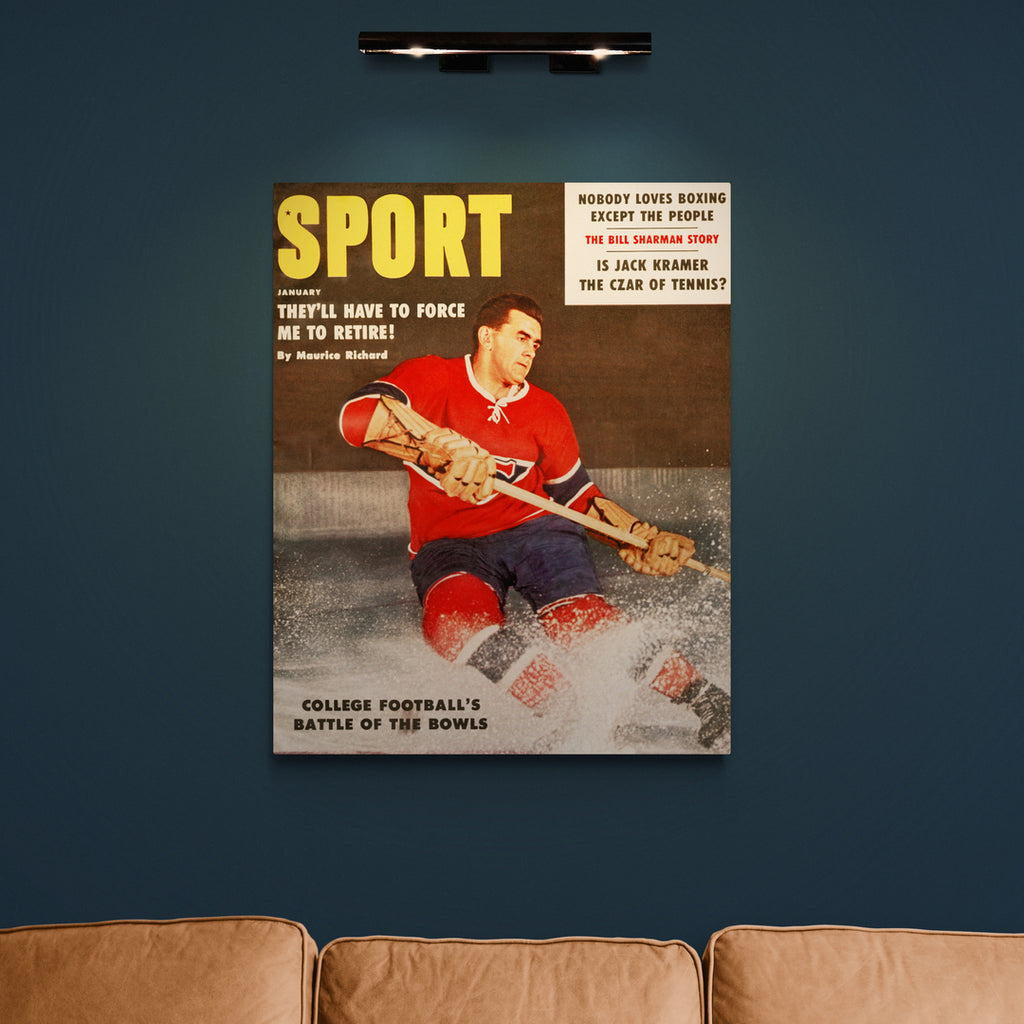
Buy This Cover

Practice is over. In their locker room, the Miami Dolphins are tossing sweaty uniforms into laundry carts and yanking shoulder pads over their heads. They're changing into jeans or flared slacks. Nobody is saying much. It's like any other job at quitting time. Get dressed and get going. But above the murmur, a voice yells out:

"Big Man."

Near the shower room, Larry Little turns and smiles.

"What's on tonight?" the voice says. "What's happenin'?"

"Check you later."

Larry Little, the guard, the leader of the offensive line, shuffles toward the shower. Quiet resumes. Several minutes later, sitting at his locker, Larry Csonka shouts:

"Manuel."

Csonka uses the correct Spanish pronunciation of Man-well and across the room, Manny Fernandez looks up, his eyes flashing between thick sideburns.

"Make a stop?" Csonka shouts. "Damn right," Fernandez says.

Larry Csonka's sidekick is Jim Kiick, his roommate. But they live in opposite directions from Biscayne College where the Dolphins practice-Zonk to the north, Kiick to the south. So the big fullback often stops for a beer on the way home with Manny Fernandez, the tackle, the leader of the defensive line.

Again the murmur of quiet conversations. One by one, the players depart. Among the defenders of the Super Bowl, the names of only two players had risen above their quiet conversations: Big Man and Manuel. Several years ago, when Johnny Unitas was in his glory as the quarterback of the Baltimore Colts, the only name shouted after practice in their locker room one day was, "Gino," meaning Gino Marchetti, the defensive end now in the Hall of Fame, then the leader of the Colts even though Johnny U got the headlines. The leaders aren't always in the headlines.

Big Man and Manuel.


Little and Fernandez try a tug-of-war.
Photo: The SPORT Collection

When Csonka, Kiick or Mercury Morris runs inside, 28-year-old Larry Little is often lost in the pile up, as all guards are. But when they run outside, he is obvious. He also is frightening. He is out there in front of them, his legs churning. his eyes peering through his facemask at a linebacker or a cornerback who wishes he were anywhere else. Once an agile 195-pound cornerback, Charley Ford of the Chicago Bears, tried to pile up a sweep. Big Man came down on Ford as if Little were a 265-pound flatiron. Csonka rumbled to a first down.

"You can't get lower than me," Big Man told the flattened cornerback.

In the Dolphins' defense, Manny Fernandez often settles into his stance across from the center. Which means that he is about to be double-teamed by the center and the guard. It's frustrating for Manuel, rewarding for the Dolphins.

"When he's double-teamed," says Mike Scarry, the Dolphins' defensive line coach, "it allows someone else to be free to get to the quarterback or the runner."

Even when he's double-teamed, Manuel still gets to the quarterback or the runner. He's among the NFL's lightest defensive tackles at 240 pounds, but against the Washington Redskins in Super Bowl VII, he was credited with 11 tackles.

"I thought Manny Fernandez was part of our backfield," Larry Brown wrote in his autobiography, I'll Always Get Up. "I thought we had three backs: Me, Charley Harraway and Manny Fernandez."


Fernandez and Little do battle.
Photo: The SPORT Collection

The contrasts between Big Man and Manuel are almost endless. One is black, the other white. One seems to see everything, the other's vision is so weak he occasionally misses the transfer of the ball on a handoff. One is annually acclaimed All-Pro, the other is annually ignored. One is from the Miami ghetto, the other from a grassy Oakland suburb. One is a big eater but shouldn't be, the other doesn't eat much but should. One needs to psych himself up for a game, the other doesn't. One is a city man, the other an outdoorsman.

But they have a common bond. Each was ignored in the NFL draft. Each made it as a free agent. And made it big. Typically, another contrast exists there too. Big Man made it the hard way, Manuel the easy way.

As a defensive tackle at Bethune-Cookman College in Daytona Beach, Florida, the Big Man had been assured by one NFL scout that he would be selected in the 1967 draft. "You'll go in the top ten rounds," the scout said.


When he wasn't drafted at all, Larry Little was so disappointed, he had no appetite. "That," he says, "is when you know something's bothering me."

But soon after the draft, the Baltimore Colts, the San Diego Chargers and the Dolphins contacted him. He chose the Chargers because they offered the biggest bonus-$750. When he arrived at their training camp, he expected to make the team. He had a trunkful of clothes with him. But he discovered that he and seven other free agents had been ordered to report a week ahead of the drafted rookies.

"That really got to my pride," he says now. "They were rookies like I was. No reason for me to report a week ahead of them."

After a few days, he requested his release. Sid Gillman, then the Charger coach, persuaded him to stay, but for two seasons Little was an obscure guard. Suddenly, in 1969, he was traded to the Dolphins for Mack Lamb, a defensive back now a junior-high-school teacher.

"I didn't particularly like the trade," Little says now. "The Dolphins weren't much then."

But as a starting guard, he began to establish his identity. The next year, Don Shula replaced George Wilson as the Dolphin coach. When he first met Larry Little during the off-season, the new coach glared.

"How much do you weigh?" Shula asked.

"About 285 right now," Little replied.

"I want you at 265," Shula ordered.

Larry Little frowned. Growing up in downtown Miami, he recalls, "We were poor, but I never was hungry. We ate good. I ate more than anybody in the family. Any food anybody didn't want, I was always around to get it." He still takes many of his meals at his mother's home. But when he trimmed himself to 265, he realized that his quickness had increased. When the Dolphins began to win, his reputation also increased. In each of his first three seasons under Shula, he was selected as the AFC's outstanding offensive lineman in a NFL Players Association poll that determines the best player in various categories.

"Three in a row ain't much," Big Man says, his ambition showing. "Dick Butkus got something like seven in a row."


When the Dolphins signed Manny Fernandez in 1968 as a free agent out of the University of Utah, his name appealed to them as much, if not more, than his ability. They hoped he would speak Spanish to Miami's growing Cuban population, even sell tickets in Spanish.

"I'm sorry," Manuel said on his arrival. "I don't speak Spanish at all. Not a word. Never learned."

He had grown up in San Lorenzo, California, a few miles south of Oakland, where his Hawaiian-born father was a construction worker. The family lived in a neat suburban neighborhood of $30,000 homes.

As a teenager at San Lorenzo High, he played football, he wrestled, he threw the discus. He went on to Chabot Junior College and to Utah, but in his senior year there, the head coach, Joe Giddings, refused to recommend any of his players to the NFL scouts. One theory is that Giddings, now an assistant coach with the San Francisco 49ers, was getting even with his players for a losing season that influenced his dismissal. Whatever the reason, Manuel was ignored in the draft. But the Dolphins quickly contacted him, the only NFL team to do so. He signed without a bonus, borrowed $30 from his father, tied his football shoes to the handle of his suitcase and reported to training camp. Quickly, he emerged as a starter, despite very poor vision.

"In night games, I have a real problem," he says. "Especially if the other team wears dark jerseys. I don't see the handoffs."

One of his eyes has been tested at 20/200, the other at 20/300. He disdains contact lenses, but off the field, he wears mod-shaped glasses, tinted and curved.

"It's better to be cool," he says, "than to be blind."


Larry Little has an expensive pad with a golf-course view, a closet of colorful clothes, a rack of fancy hats, and a cognac-brown Cadillac parked outside. But he remembers. Before the 1970 training camp, he organized the nonprofit Gold Coast Summer Camp for underprivileged boys in the Miami area.

"Two ex-Dolphins are in it with me, Fred Woodson and Rudy Barber," he says. "Two one-week sessions. This year we had 167 kids the first week, 142 the second. Mostly black kids, maybe a dozen white kids, a few Cuban kids. The first year we had 'em sleeping in tents down at the end of the beach, but ever since then, we've been at Biscayne College in air-conditioned dorms. The kids don't want to go home. They're not used to three squares and air-conditioning.

"It's a football-oriented camp, but we try to teach the kids discipline. We don't stand for no nonsense. Fred Woodson once caught a kid gambling, he took him home. This year we caught a kid stealing, but we gave him another chance. The last day, another kid was missing a radio. We found it on the other kid. I told him how much it hurt me, that he'd do this. I tried to show him how stealing can lead to robbery, how robbery can lead to murder. I rap all the time."

Several months ago Biscayne College awarded Little an honorary degree: Doctor of Science and Human Relations.


In the years before the Panama Canal opened, Manny Fernandez's grandparents sailed from Spain around Cape Horn to Hawaii. Their adventurous spirit lives in him. He rides a swamp buggy across the Everglades to hunt deer and alligators. He even hunted for bear in Little Sur Canyon in California on his honeymoon last year. He goes deep-sea fishing off the Florida coast. He has had the speedometer arrow at 120 mph on his motorcycle. Once, zooming onto the Nimitz Freeway in Oakland, he knocked down a roadside sign. With his face.

"I broke my jaw in two places. Fractured seven teeth. Tore up my lip. Broke my nose. Peeled half the skin off my face."

As he mentioned the injuries, he fingered the scar on his chin and laughed. Manuel seemed to remember them with affection.


Like many sensitive people, Larry Little thrives on a challenge. The better the man against him, the better he plays. When the Dolphins went against the Pittsburgh Steelers for the AFC championship last season, Little faced Mean Joe Greene, the All-NFL tackle.

"Little is a good guard, one of the best," Mean Joe proclaimed. "But he'll have to double me."

Perhaps half the time, the Dolphins did double-team Joe, with center Jim Langer helping Little, mostly in passing situations. But the other half of the time, Big Man handled Mean Joe by himself, thank you. Big Man rates himself as the best guard, not "one of the best," as Mean Joe had mentioned.

"And when you're the best," Big Man says, "you got to keep proving it. Against the big players. In the big games."

Two weeks later, he proved it in Super Bowl VII against Manny Sistrunk, the Redskins' defensive tackle. In the week before the game, Sistrunk was quoted as saying that Larry Little "made his reputation" by blocking cornerbacks. As if cornerbacks were kindergarten kids.

"That really irked me," Little says. And it really backfired on Manny Sistrunk. When they lined up against each other for the first time, Little said:

"I'm going to play ball today, big guy. You better be ready."

Manny Sistrunk wasn't quite ready for the Big Man that day.


Little and Fernadez arm wrestle.
Photo: The SPORT Collection

The Redskins weren't ready for Manny Fernandez, either. But unlike the Big Man, who meditated on the embarrassment of losing the Super Bowl in order to psych himself up, Manuel appeared about to fall asleep in the days before the game. Perhaps he was too weak to care. During the season he had played three games as a commuter from a Miami hospital, where he was being treated for bronchial pneumonia. His weight had dropped to 235 pounds.

"You go out and play and it's over in three hours," Manuel shrugged. "Whatever happens, happens."

What happened was that many observers thought that he, not safety Jake Scott, deserved the Dodge Charger that SPORT awards to the Super Bowl's Most Valuable Player. Jake Scott later comforted Manuel, as only a teammate can.

"Hey, Manny," the safety said, "you got screwed again."

Manuel grinned. He had no complaints about Jake's prize.

"Winning the car never entered my mind until I heard that Jake won it," he says now. "I was happy for Jake, he played a helluva game for a guy who was healthy but he had two bad shoulders. I mean, bad. One time he was in such pain, I told Nick [Buoniconti, the middle linebacker who calls the Dolphins' defensive signals] to get him out of there because I really didn't think Jake knew what he was doing. After the game, Nick told me, 'Now I know why you wanted Jake out.' If they'd given the car to somebody on the Redskins, I'd have been heated. But when Jake got it, I was glad. He made two big plays. That's what this game is. Big plays."

This game is also recognition. Manuel has not received much.

"Not making All-Pro, that doesn't bother me because All-Pro is politics," he says. "The only thing I want personally is to be in the Pro Bowl game. Of all the goals I set for myself, that's the only one that hasn't happened yet. Maybe this year."


"I haven't had a big moment yet this season," Larry Little was saying recently. "The big moment will be the Super Bowl again."

On the defensive side of the Dolphins' locker room, Manny Fernandez was talking about why the Dolphins continue to win.

"Team defense and team offense," he was saying. "There's no petty stuff on this team. If anybody screws up, he hears about it. No stars on any lockers here."

Not even on the lockers belonging to Big Man and Manuel.

© SPORT Media Publishing

Untitled

The Online SPORT Archive
  Untitled
More Selections

Sports Pictures

Tell a friend about this page


Sports Pictures